
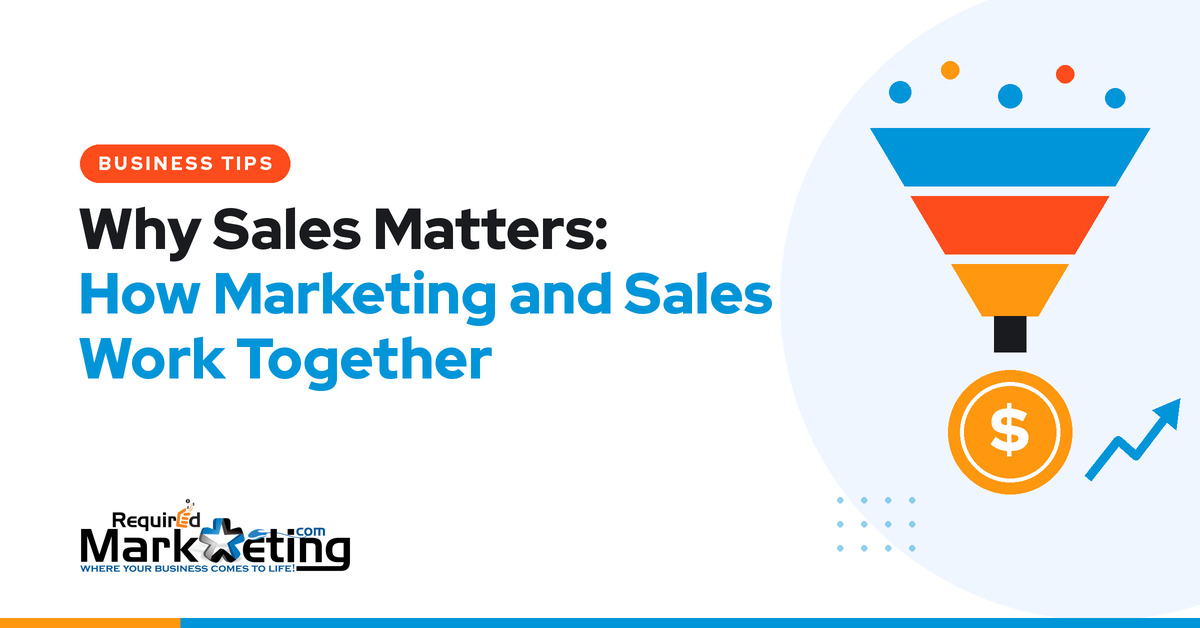
Marketing gets people interested. Sales turns that interest into revenue. In a small business, the same person often does both jobs, usually the owner, sometimes in the same afternoon. That is exactly why it pays to understand how the two fit together.
When marketing and sales work as one system, leads arrive warmer, conversations go faster, and fewer good prospects slip through the cracks. When they work separately, you end up paying for attention you never convert. Here is why sales matters so much, and how to get your marketing and sales pulling in the same direction.
Marketing Opens the Door. Sales Walks People Through It.
A simple way to think about it:
- Marketing creates awareness and interest. It helps the right people find you, understand what you offer, and raise their hand.
- Sales turns that interest into a decision. It answers questions, handles concerns, makes a clear offer, and asks for the business.
The U.S. Small Business Administration notes that not everyone agrees on the exact line between marketing and sales, but most people recognize they are connected. The SBA even builds a sales plan into its recommended marketing plan, asking owners to explain each step a customer takes once they decide to buy.
Why Sales Deserves Your Attention
A lead is not revenue. A form submission, a phone call, or a direct message is an opportunity, and opportunities expire. Strong sales habits are what turn your marketing spend into actual customers.
Selling is also getting harder for many teams. Salesforce’s 2026 State of Sales report, based on a survey of 4,050 sales professionals in 22 countries conducted in August and September 2025, found that:
- 57% of sales professionals say the sales cycle is getting longer.
- The average seller spends 40% of their time selling and the other 60% on non-selling work such as data entry, prospecting, and internal approvals.
- Sellers devote nearly one full day of their workweek to prospecting, yet 48% say they still lack the bandwidth for adequate cold outreach.
Buyers are also less patient with generic pitches. Salesforce cites Gartner research finding that 73% of B2B buyers actively avoid sellers who send irrelevant outreach.
For a small business, the lesson is simple. Protect your selling time, keep your tools simple, and make every conversation relevant to the person in front of you.
What Happens When Marketing and Sales Don’t Talk
Even a one-person business can have a gap between marketing and sales. It looks like this:
- Leads go cold because nobody follows up quickly.
- The message changes between the ad, the website, and the sales conversation, so prospects get confused.
- Money goes to the wrong channels because no one tracks which leads actually became customers.
- Content misses the mark because it does not answer the questions customers really ask.
This is a common struggle, not a small business problem alone. HubSpot’s 2026 State of Marketing research lists sales and marketing alignment as one of marketers’ top challenges. The encouraging news is that alignment is achievable. In HubSpot’s State of Sales research, 91% of sellers said their teams are aligned, 41% called that alignment strong, and 73% of reps rated their marketing leads as high quality.
How to Get Marketing and Sales Working Together
You do not need a big team or complicated software. You need a few shared agreements and the discipline to keep them.
1. Agree on who your ideal customer is. Write down the type of customer you want more of: their industry or situation, their budget, and the problem you solve for them. Marketing should target these people, and sales should prioritize them.
2. Define what a “good lead” looks like. Decide what makes an inquiry worth a fast, personal follow-up. For example, it might be someone in your service area who asked for a quote on a service you offer.
3. Set a follow-up promise and keep it. Choose a response time you can actually meet, such as the same business day, and treat it as a commitment.
4. Share what customers are asking. The questions you hear on sales calls are the best source of website content, social posts, and email topics. Answer them publicly and your future sales calls get shorter.
5. Track every lead in one place. A simple CRM, or even a well-kept spreadsheet, should show where each lead came from, what happened next, and whether it turned into a sale.
6. Close the loop. Every month, look at which marketing channels produced paying customers, not just clicks or calls. Move your budget toward what works.
Make Your Marketing Do Some of the Selling
Good marketing does part of the sales job before you ever speak with a prospect. It sets expectations, answers common questions, and builds trust.
A few ways to do that:
- Publish clear service pages that explain what you offer, who it is for, and what happens after someone contacts you.
- Show proof. Real reviews and examples of your work help people feel confident.
- Use email to stay in touch with people who are not ready to buy yet.
- Personalize where it counts. In HubSpot’s 2026 State of Marketing research, 93.2% of marketers said personalized or segmented experiences have led to more leads and purchases. Even simple segmentation, like separate emails for new and returning customers, can help.
Sales Doesn’t End at the Sale
The customer experience after the sale shapes your next sale. The SBA points out that operations, from your staff uniforms to your return process, shape how customers view your company and whether they become loyal or tell friends to stay away.
Reviews are a big part of that. BrightLocal’s 2026 Local Consumer Review Survey found that 80% of consumers say they are likely to use a business that responds to all of its reviews. Thanking customers, asking for feedback, and replying to every review keeps the sales cycle going long after the invoice is paid.
A Simple Weekly Routine for Owners
If you wear both hats, block 30 minutes each week to check in with yourself:
- How many new leads came in, and from where?
- Did every lead get a reply within your follow-up promise?
- What questions did prospects ask that your website does not answer yet?
- Which deals are stuck, and what is the next step for each one?
- Which customers could you ask for a review or a referral this week?
If you would like an outside perspective on the bigger picture, our consulting services cover strategic planning and research, along with AI-powered marketing automation and lead generation systems that help marketing and sales work as one.
Let’s Connect Your Marketing and Sales
Marketing and sales are two halves of the same job: helping the right customers say yes. Start with one or two of the steps above this week. If you would like a partner, Required Marketing Group Inc. would be glad to help you build a system that turns more of your leads into customers.
Request a quote at https://requiredmarketing.com/quote-request/ and tell us about your goals. You can also email us at [email protected] or call our main line at (844) 978-1051.